About Us :.
Products :.
Activities :.
Halal Matters :.
Recipes :.
Tour :.
Health Tips :.
R&D / QA :.
Contact :.


    A WORD FROM PROF. DR. FATIMAH ARSHAD

Food is an important part of everyone’s life. It not only provides us with nutrition but also serves an integral part in the way we socialise – whenever there’s a celebration a grand feast is never far behind. We eat not merely for sustenance but also enjoyment.

Nevertheless, today we’re consuming much more food than our ancestors did in their lifetimes. Not only does the modern diet consists of a lot more carbohydrates cleverly hidden in various forms, it also has more sugar, more salt, more fat and a whole lot more calories. This means our bodies are getting more energy than it requires. And with the convenience and larger portions of fast foods, obesity and health-related risks are reaching an alarming rate.

Most people will say it’s not that they don’t want a better diet, but that healthy yet satisfying food alternatives are becoming harder to find. But although we see more unhealthy food choices than healthy ones around, it doesn’t mean it’s difficult to eat right. With the right attitude and knowledge as well as strong willpower, following a healthy diet is not impossible.

A simple guide to a healthier diet is to consume moderate amounts of carbohydrates, preferably those with a low glycaemic load like non-starchy vegetables, fruits, legumes and high-fibre whole-grain products to maintain consistent blood glucose levels. You should also choose proteins with less fat like leaner cuts of meat, fish and poultry. Reduced consumption of salt and sugar will also reduce your risk of health-related problems. Above all, moderate exercise and a healthier lifestyle will set you on the right path to a healthier you.

Thank you.

Prof. Dr. Fatimah Arshad

EAT TO LIVE OR LIVE TO EAT?

We Malaysians simply love to eat. In a melting pot of culinary delights exploding with delicious flavours, who can resist a plate of fragrant nasi lemak, spicy-rich mee goreng, or crispy roti canai? But as delicious as they are, too much of a good thing isn't always good for health. And with so many festive celebrations that always involves a sumptuous feast, you may find it difficult to eat healthy all the time. Nevertheless, it's not impossible... with Gardenia's new Breakthru bread.

THE NUTRITIONAL VALUE OF FOOD

All foods are composed of macronutrients, micronutrients and water. Apart from water, food is made primarily of the macronutrients protein, fat and carbohydrate. These 3 macronutrients are the only food components that provide energy (measured in calories) to sustain life. On the other hand, micronutrients i.e. vitamins & minerals provide no caloric energy but are nevertheless essential for life.

The foods we eat exert a profound influence on what happens within our bodies hormonally - both for good and for bad. By eating the correct balance of foods we can alter what goes on inside us in a healthful way.

RELATIONSHIP BETWEEN HORMONES & FOOD

Few of us realise how crucial hormones are. They regulate virtually everything our body does, from controlling blood sugar levels to other basic survival mechanisms involving stress, fear and even love.

A very important hormone is insulin. It can be called the master hormone of human metabolism because it helps in the regulation of blood pressure, the production of cholesterol and triglyceride and the storage of fat. When insulin levels become too high, metabolic havoc ensues with elevated blood pressure, elevated cholesterol and triglycerides, with diabetes and obesity trailing along in its wake. The wrong diet can make your insulin levels go haywire.

CHOLESTEROL AND YOUR BODY

Cholesterol is something your body cannot do without as it serves many important functions in your body. In moderate amounts, it is helpful in digesting fats, strengthening cell membranes and producing hormones. However, too much cholesterol in your blood may put you at risk of developing heart disease. When blood cholesterol levels are too high, specifically LDL (bad) cholesterol, it can build up on artery walls, increasing the risk of blood clots, heart attacks and strokes.

FACTS ABOUT HIGH CHOLESTEROL
1.Where excess cholesterol comes from.
Your body actually produces all the cholesterol it needs by itself – about 1,000 mg of cholesterol per day, through your liver. However, your body can absorb an additional 200 – 500 mg of cholesterol from the food you eat. The rest is excess that floats in your bloodstream.

2.Children are also as susceptible to high cholesterol levels as adults.
Studies show that the atherosclerotic process (build-up of fatty plaque in arteries) starts in childhood and progresses into adulthood. Children from high-risk families (parents with high cholesterol, or parents or grandparents with heart disease at 55 years or younger) should have their cholesterol levels tested.

3.You can never tell if you have high cholesterol.
High cholesterol has no symptoms. It doesn’t cause headaches or high blood pressure. Neither does it cause you to gain weight. The only way to know your cholesterol levels is by having them checked by your doctor.

4.Cholesterol levels can be regulated without medication.
In most cases, a change in lifestyle will do wonders for your body. A healthier diet and regular exercise along with quitting smoking (if you’re a smoker) can positively affect your cholesterol levels. Your doctor will usually prescribe a healthy regiment before prescribing medication if that doesn’t lower your cholesterol.

5.High cholesterol puts you at risk for atherosclerosis.
High cholesterol levels put you at risk for atherosclerosis (fatty build-ups of plaque in artery walls). These deposits can contribute to blocking blood flow to parts of your heart muscle and cause a heart attack. A high LDL level (more than 160 mg/dL or 130 mg/dL or above if you have two or more risk factors for cardiovascular disease) indicates an increased risk of heart disease. Atherosclerosis in arteries in or leading to the brain can result in a stroke.

GLYCAEMIC INDEX (GI)

The Glycaemic Index (GI) was developed in 1981 to help people (especially athletes and diabetics) to maintain stable blood sugar levels. The GI is a ranking of foods on a scale from 0 to 100 according to the extent to which the foods raise blood sugar levels after consumption.


Individual foods with a high G.I. release glucose into the blood stream quickly. This causes blood sugar levels to rise rapidly and invokes an insulin spike resulting in high insulin release into the blood stream. On the other hand, foods with a low G.I. release glucose more steadily over several hours. This helps to keep blood sugar levels relatively calm.

GLYCAEMIC LOAD (GL)

Whilst G.I. refers only to how a particular food affects the body’s sugar and insulin levels, Glycaemic Load (G.L.) tries to calculate the combined value of one or more foods’ G.I. readings and how much of them a person eats. Therefore, G.L. can be used to describe the effects of one food, a meal, or an entire day’s food intake. The G.L. of a person’s overall diet is more significant than the G.I. of individual foods.


To be healthy, make sure you get sufficient nutrients and fibre, and avoid a blood sugar spike.

A BREAKTHROUGH FROM GARDENIA

Now that you know how food invokes a hormonal response in your body, and understand the basic important concepts of Glycaemic Index of a particular food and the Glycaemic Load of a particular meal intake, let’s introduce you to our new improved Gardenia Breakthru Formula MultiWholegrain Fibremeal.

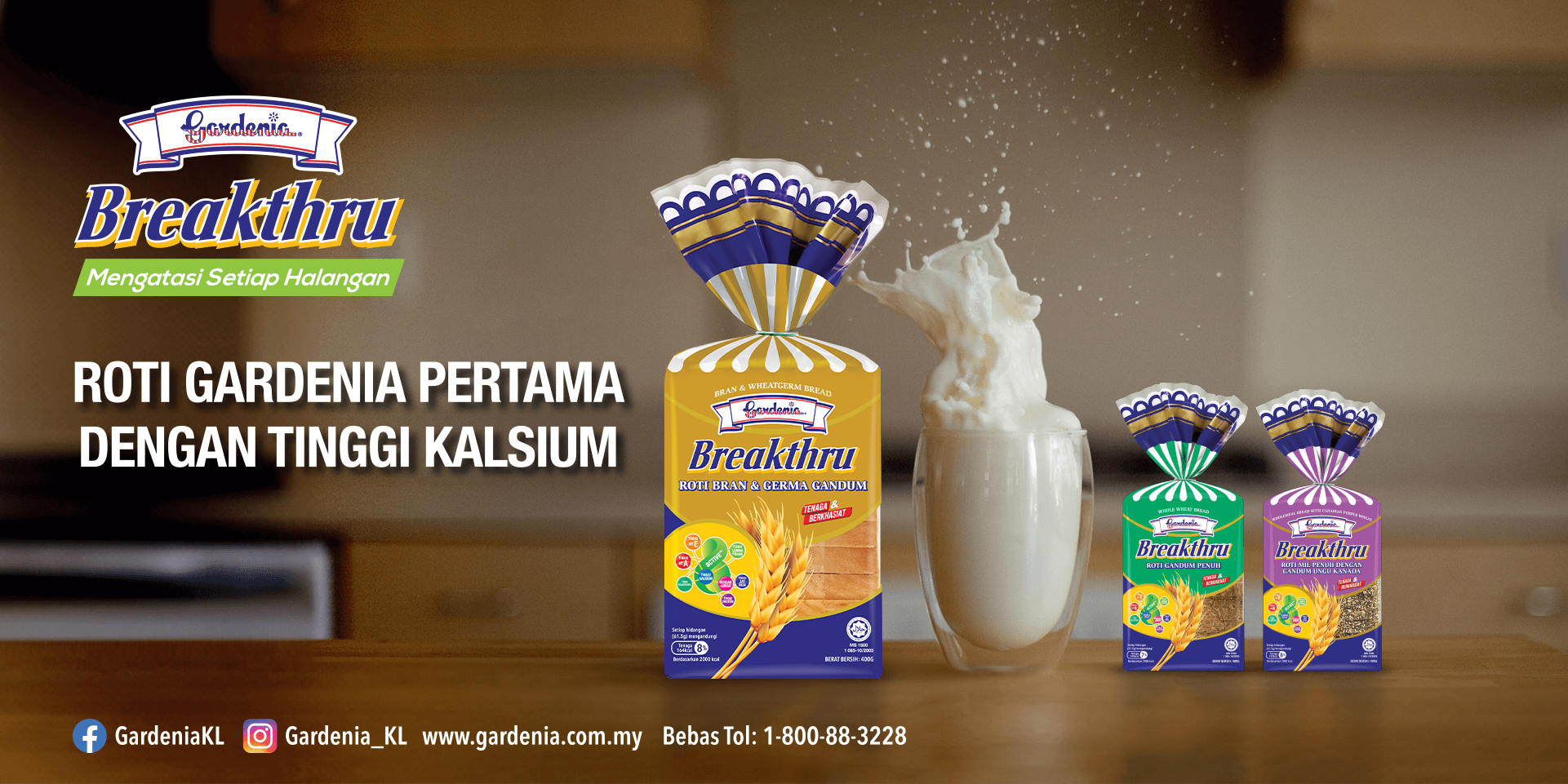
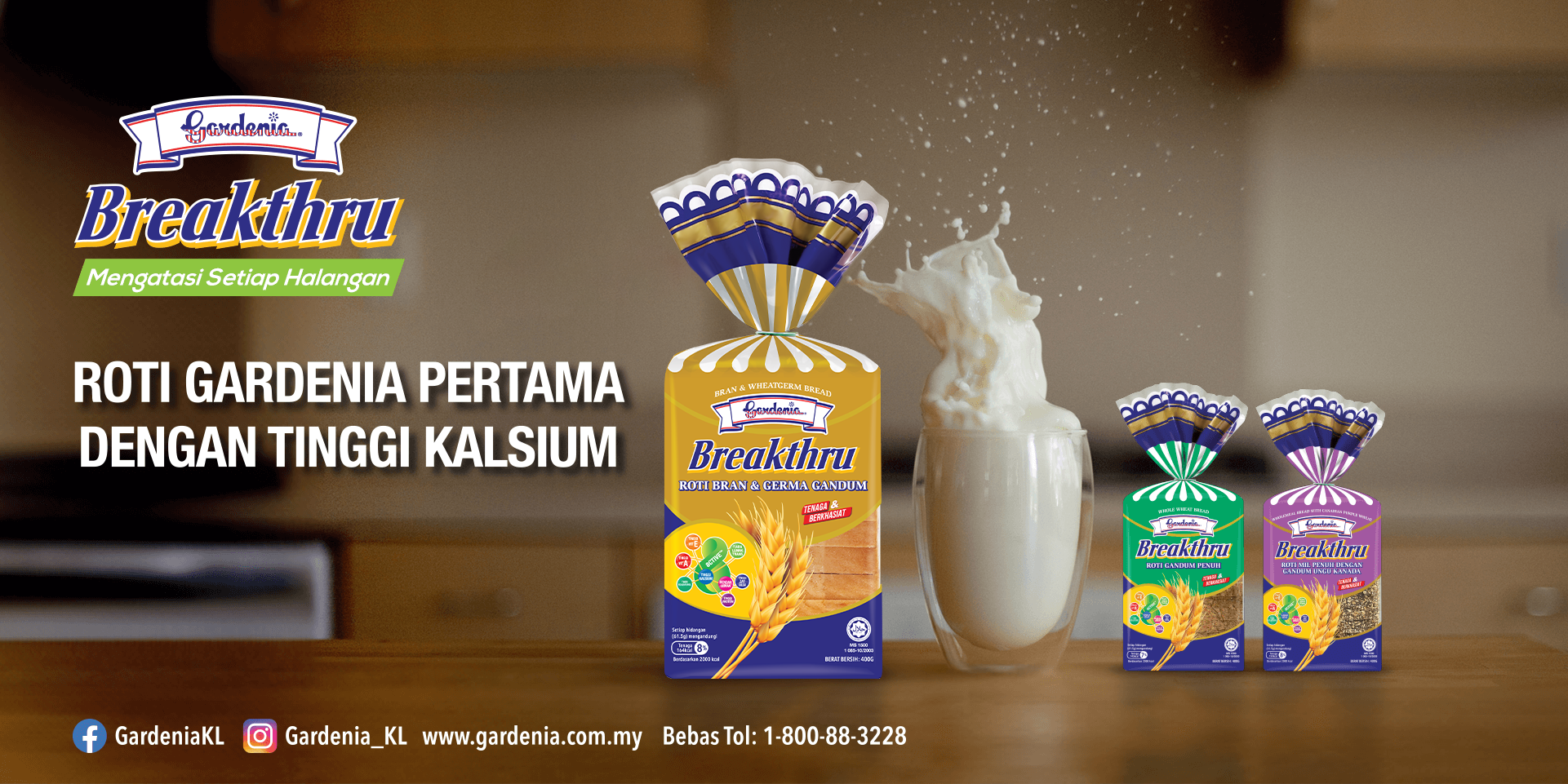
A breakthrough in providing a more balanced nutrition that’s ideal for the modern lifestyle, Gardenia Breakthru is no ordinary bread. It is the first and only bread in the market created specifically with you and your family’s wellbeing in mind, developed in collaboration with dietitian Prof. Dr. Fatimah Arshad and a panel of researchers using very special functional ingredients to achieve a low Glycaemic Index and low Glycaemic Load.

NOW WITH BETA GLUCAN TO HELP LOWER CHOLESTEROL

With the immense positive response of Gardenia Breakthru from health-conscious consumers, we decided that it was time we put even more goodness into our bread. And so we added Beta Glucan.

A soluble dietary fibre naturally found in whole oats, Beta Glucan has been shown in studies to help lower LDL (bad) cholesterol. This non-starch polysaccharide has also shown huge potential in research as a prebiotic to boost the immune system and speed up response to infection, which may result in faster healing. Besides controlling cholesterol levels, Beta Glucan has also been positively tested to be helpful in regulating blood sugar levels.

DIABETIC & DIET-FRIENDLY TESTED & APPROVED

After extensive clinical trials at the Glycemic Research Institute (GRI) in Washington D.C., Gardenia Breakthru passed all clinical protocols for “Low Glycaemic” foods as required by FDA and FTC guidelines, and as specified by Standardized Clinical Testing Protocols accepted worldwide. Accordingly, we have been awarded the GRI Seals of Approval that acknowledges it as a diabetic-friendly low glycaemic food. This award concurs with earlier tests that were conducted and verified by a renowned local university.

Gardenia Breakthru is also clinically tested and certified as a Diet Friendly food by the Glycemic Research Institute for its Low Adipose Tissue Fat-Storing Capacity. Diet Friendly Gardenia Breakthru with controlling fat-stimulation properties, allows for better control over fat-storage and development of obesity.

NOT ALL BREADS ARE CREATED EQUAL

With Gardenia Breakthru you also get more protein and fibre, less carbohydrates and calories, and all the essential nutrients your body needs for a healthier and more wholesome diet. And unlike the blandness associated with most health foods, you’ll be pleasantly surprised to know that Gardenia Breakthru is extremely delicious, much like our range of normal breads. In fact, Gardenia Breakthru makes excellent sandwiches.


Compared to ordinary white sandwich bread, you can expect a whole lot more goodness from Gardenia Breakthru:

HOW MANY CALORIES DO YOU REALLY NEED?

Our body requires a certain amount of energy each day to get us through our day. Your body's specific daily calorie requirement depends on your level of activity, age, size and gender. The more active your lifestyle, the more energy your body needs. Likewise, the less active you are, the less energy you need. As a basic guide, an average male requires between 2,000 - 2,500 kcal per day, and an average female requires between 1,500 - 2,000 kcal per day. A more accurate assessment of your actual daily calorie requirement can be calculated using your Body Mass Index (BMI). Click for more information on BMI..

Recent studies have shown that we're actually consuming far more food and several hundred more calories today than people did 50 years ago. In fact, an average person consumes about 500 more calories per day now than in 1970. That works out to be a whopping 185,000 in excess calories a year. This means that if it takes an average person 30 minutes of brisk walking to burn off 139 calories, you would have to walk non-stop for almost 28 days just to burn all the excess calories away!

Your daily caloric needs should dictate the way you plan your meals because excess calories consumed from any source will, over an extended period of time, lead to increase body weight and obesity, But, most of us are not aware of how many calories we consume each day. So, to give you a brief idea of your daily calorie intake, here are a few common food examples and their calorie content:

EAT HEALTHY, STAY HEALTHY

Eating healthy doesn't mean you have to say “goodbye” to foods like nasi lemak, mee goreng or roti canai. With the right plan, you can still enjoy your favourite dishes as long as you have more healthy meals than less healthy ones. Just remember to exercise, get enough rest and practise a healthy lifestyle as often as possible. Don’t wait till your health deteriorates before you make a change because prevention is always better than cure. So eat well and stay well with Gardenia Breakthru, the diabetic-friendly and diet-friendly bread that’s better for you.


Copyright@(2004-2008) Gardenia Bakeries (KL) Sdn. Bhd. All Rights Reserved. | [WebMaster]